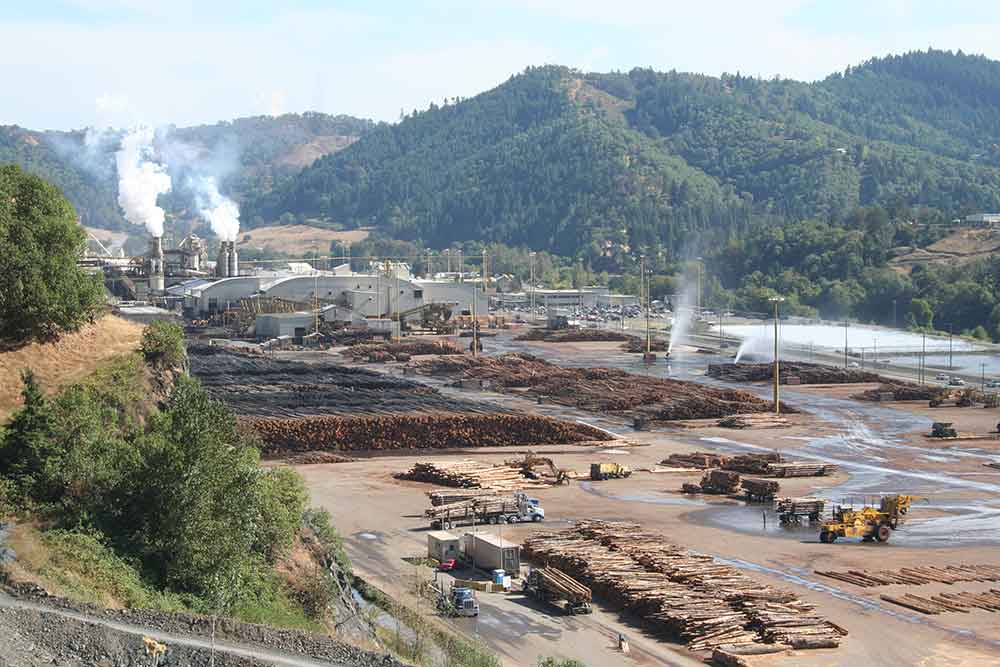
As I age, I find myself looking back more and more at my childhood; I’m sure many of us do. I guess that old saying — you never quite appreciate what you have until you no longer have it — is truer than I thought. The memory that comes first, every time, isn’t a person or a single afternoon so much as a smell: the sharp, warm smell of fresh cut wood that seemed to hang over Winston like a weather pattern. It was everywhere — in the mornings when the town was still half-asleep, drifting off the mill like steam; in the schoolyard when your hair smelled of sawdust and you didn’t know it; on the leather of your father’s jacket, on the dashboard of the trucks idling down Highway 99. That smell said something then: work, money, a rhythm the whole town marched to.
Winston itself was plain, almost willfully so, like someone had drawn a map and said, “Place houses and shops here, don’t bother dressing them up.” No gingerbread porches, no pretentious facades — just weathered storefronts, a few chain places, the courthouse, and that single stoplight like a punctuation mark in the middle of Main. But step out of town a mile either way and you hit scenery that made postcards jealous: the South Umpqua threading the valley, fir and cedar climbing the hills, a kind of green I didn’t know had names until I left. Highway 99 ran through us, the old road that could take you south to Los Angeles or north toward Canada if you had the nerve and time. Highway 42 wound your west, a narrow ribbon of asphalt and switchbacks that dropped you to the Pacific in about forty‑five minutes — enough that the ocean felt like an idea just over the next hill.
The one stoplight — God bless it — existed because of timber. The mill and the logging trucks and the men who woke before dawn to wrest trees out of the ground were the reason Winston had anything to call its own. For a long time, the county’s life was one-directional: timber in, paychecks out. You could set a clock by the mill whistle and the sound of chains being wrapped around a log. Kids learned to read the town’s fortunes in the rumble of log trucks: more loads, better months; fewer trucks, tighter gas cans and quieter bar stools. And then, later, came talk of politics and policy and “well-crafted lies” that tore a hole in that life — but that was later. For a kid, the town’s future was simply the next summer, the next cut, the next bunk of plywood to be made.
So, this blog will be about growing up — or at least attempting to — in an era that, if you were there for it, felt like nothing else since. It will be about mornings that smelled of sap and sawdust, afternoons that ended with the distant clack of a mill, and the way a whole community’s heartbeat can be measured in cords of wood.